For the Day After Valentine’s Day
Dank February’s leavened
turf broods green stirrings, true, but now the glaze,
steel-bright, sun sheeted on our frosted yard
lured me outdoors past yesterday’s
bouquet and card,
your Valentine gift, poor
compared with breathing roses our tight-trimmed
shrubs still withheld, I thought. Then my dull tread
stopped cold—what was that distance-dimmed
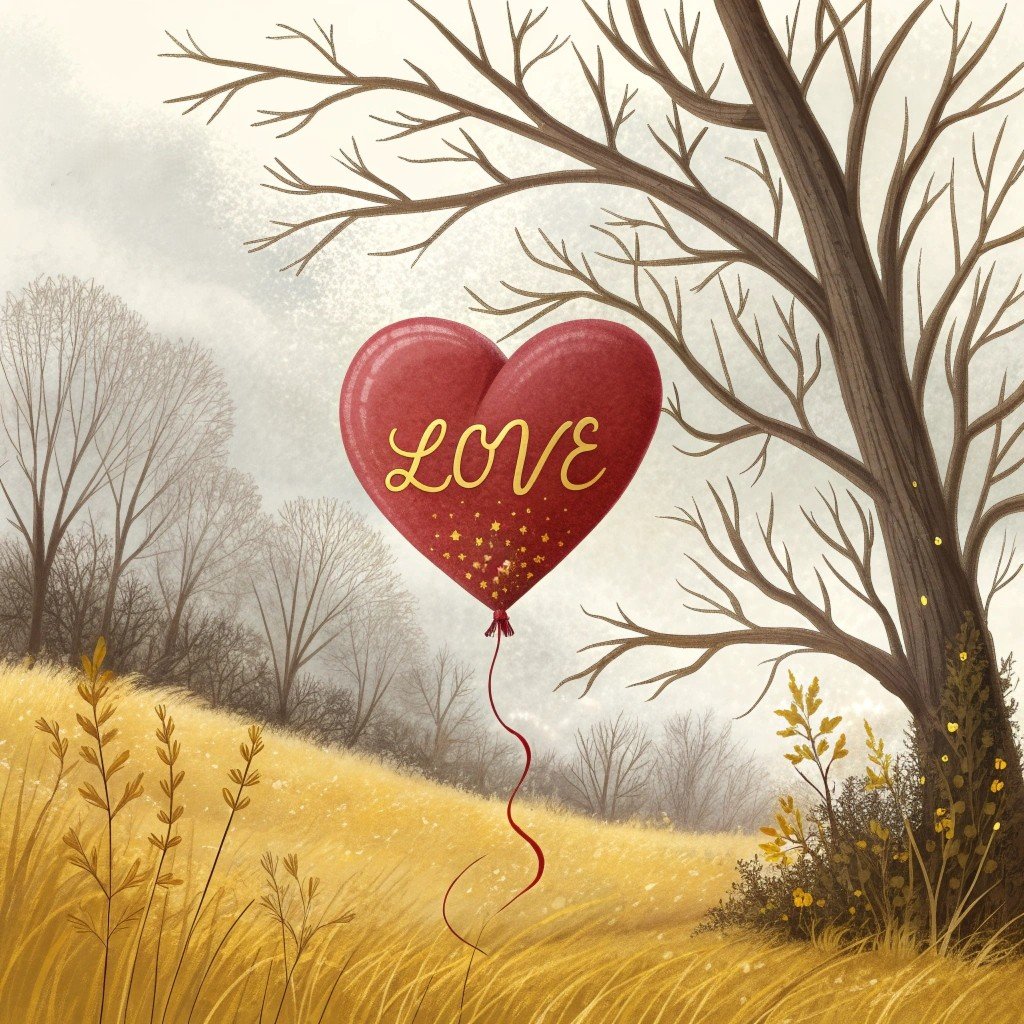
blotch, glossy red,
swaying in a thick scraggle
of brush, far-off, like a gash on the background,
a livid wound? I tiptoed nearer. Soon,
eyes dazzled by gold script, I found
a red balloon
named “LOVE.” Would Love, I wondered,
freed to traverse great sky with dangling string
and view mosaic earth have evanesced
on our drab acre, weeks from spring?
Why pick, half guest,
half suppliant, our home?
Your new bouquet, it slipped your hands and climbed
drapes where it shyly teased such questions, bobbing
yes-no, yes-no—a heartbeat timed
to our hearts throbbing
for meaning in its coming—
were we, tucked in suburban sameness, hosting
in Dollar Store disguise some fallen star,
our bouncy, enigmatic lostling
an avatar?
Floating enrapt, we lost
day’s plan to an intoxicating sense
of being chosen, weightless helium
we breathed while opaque reticence
crept lower, mum.
Then night claimed our day-sleep,
and frost-white morning woke us to a shape-
less rubber membrane shriveled on the floor,
curled as though straining to escape
our too-firm door.
You pruned your bouquet later,
I dry-mulched shrubs, each mulling why we thought
our strayed balloon was more than gravity
or Sunday luck or weather brought—
so buoyantly
named “LOVE,” so strangely drawn
to our oak-hidden lives it open-ended
a mundane day’s unpondered iteration,
so like a guest’s not unintended
visitation
disguised as the gold-lettered
balloon we hosted—even if it was-
-n’t Love come from blue emptiness of sky,
leaving a cloak so we would pause
and wonder why.
Poet’s Note. The legend of Baucis and Philemon is told in Book 8 of Ovid’s Metamorphoses. Baucis and Philemon were a poor, elderly couple who lived in a village in Phrygia. One evening two travelers knocked on their door and asked for a meal and lodging for the night, after having been turned away by every other neighbor in their village. The old couple welcomed the travelers into their home with kindness and generosity. The strangers then revealed themselves to be Jupiter and Mercury traveling among mortals in disguise. To reward the old couple’s hospitality, their simple home was transformed into a temple, and they were granted their two wishes: to serve the gods as keepers of the temple and to die together. On their death Baucis and Philemon were transformed into a linden and oak tree with intertwined roots as symbol of their eternal love.